
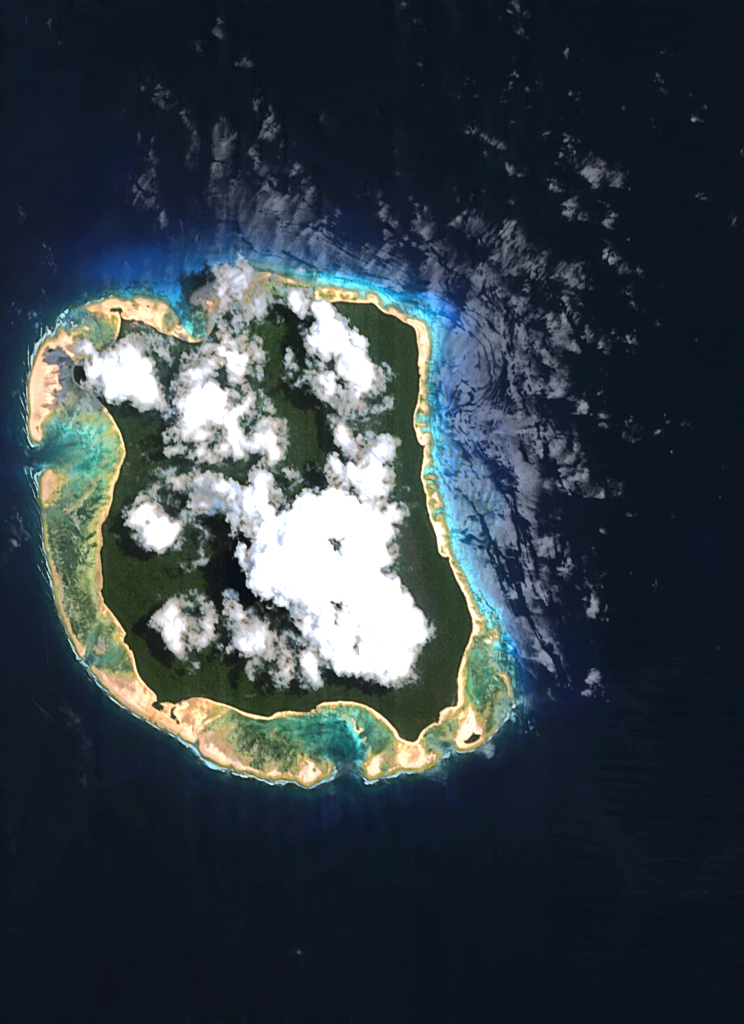
North Sentinel Island is a small island in the Bay of Bengal, part of the Andaman Islands. The Sentinelese are one of the world’s oldest remaining communities, with generations going back over 70,000 years. They are now the last remaining indigenous human tribe without true contact with outsiders.
In the past…
In 1296, Marco Polo wrote a description of Andamanese Islanders as “a most brutish and savage race, having heads, eyes and teeth like those of dogs. They are very cruel and kill and eat any foreigner whom they can lay their hands upon”. This description, historians say, was written without any actual visit by Marco Polo to the Andaman Islands.
In 1771, a British surveyor for the East India Company recorded “a multitude of lights… upon the shore”. This was the first recorded mention of the island, and the first sign to the expanding western world that it was inhabited. However, the vessel the Diligent didn’t stp to investigate, as hundreds of coasts across the globe still held locals and indigenous tribes at this time.
In 1867, the Nineveh was wrecked on the reef of the island. The vessel contained eighty-six passengers and twenty crewmen, who all left the wreck to the supposed safety of the beach in a smaller boat. On their third day stranded on the island, as they ate breakfast, they were attacked. “The savages were perfectly naked, with short hair and red painted noses… their arrows appeared to be tipped with iron”, the captain reported after being rescued from the ship’s boat, in which he fled at the first shower of arrows. At this point, the Andaman Islands had come under the banner of the British Empire, and so the Royal Navy send a party to rescue the passengers and crew of the Nineveh. They had managed to keep the islanders at bay by brandishing sticks and stones, and by the time the rescue party arrived the islanders had retreated back into the thick forest.
1879 was the year Maurice Vidal Portman, Officer in Charge of the Andamanese, organised his own expedition to North Sentinel, hoping to discover more about the natives. He brought with him a large party of armed men, and together they tramped through the jungle to try and find the locals. They found a web of pathways crisscrossing through the forest and several small villages, but the locals were hiding from them. They came across the skeleton of a local, pushed into the roots of a large tree. After several days of evading confrontation, Portman and his men managed to capture an elderly couple and some children. The adults and four children were brought back to Port Blair for observation, where Portman wrote that they “sickened rapidly, and the old man and his wife died, so the four children were sent back to their home with quantities of presents”. By the time of his death, Portman had grown fond of the islanders, describing that “in many ways they closely resemble the average lower-class English country schoolboy”. To the Royal Geographical Society, he concluded a speech by saying: “That their association with outsiders has brought them nothing but harm, and it is a matter of great regret to me that such a pleasant race are so rapidly becoming extinct. We could better spare many another.”
In 1896, a Hindu convict managed an escape from the main penal settlement on Great Andaman Island, constructing a makeshift raft and drifting onto the beach at North Sentinel. Some days later, his body was spotted on the beach there, pierced with arrows and throat cut.
In 1974, a film crew shooting a documentary called Man in Search of Man pulled up to the island, planning to “win the natives” with friendly gestures and gifts. The crew was accompanied by armed policemen, anthropologists, and a photographer for National Geographic. As their dinghy approached, the islanders emerged from the trees, and their plans to offer friendly gestures were cut short by a shower of arrows sent in their direction. After finding a clear spot that arrows could not reach, they left their gifts: a miniature plastic car, a tethered live pig, coconuts, a toy doll and some aluminium cookware. From the sea, they waited in their dingy and observed how the gifts were received. Some natives speared the pig and the doll before burying them in the sand but took the cookware and the coconuts with ‘evident delight’. Other locals meanwhile sent more arrows towards the crew, and upon seeing that one arrow hit the film director in the thigh, the shooter was seen to laugh and cheer proudly.


In 1975, Leopold III, the exiled king of Belgium, was on a tour of the Andaman Islands, and brought by local dignitaries on a cruise through the waters surrounding the island. By this point, the Sentinelese had made their feelings to outsiders very well known, and the cruise was kept out of the range of arrows. Still, a Sentinelese man aimed his bow towards the king and aimed, which reportedly delighted and satisfied Leopold III with his adventure.
On the night of August 2nd 1981, a freighter travelling between Bangladesh and Australia ran aground on a coral reef on the north point of North Sentinel island. In the morning light, the captain could see that they were just a few hundred yards from land and decided that rather than sending life boats out into the rough waters, they would wait where they were stranded for help. After a few days, the crew of the Primrose spotted people coming from the forest down to the beach to take a look at the stranded vessel. The captain assumed them to be a rescue party, before taking a closer look at the individuals: smaller than 5 foot as adult males, dark-skinned, entirely naked and brandishing spears, bows and arrows in a way that indicated they were unhappy at the arrival. Not long after this point, the Regent Shipping Company’s offices in Hong Kong received urgent distress calls from the Primrose, asking for them to immediately airdrop enough firearms for the crew to defend themselves. The captain had seen the 50 or so ‘wild men’ speedily crafting wooden boats on the beach and had begun to worry that they would be able to board the Primrose by sunset. “All crew members’ lives not guaranteed”, the captain wrote.
The rough seas that prevented the crew escaping on lifeboats were the same ones that prevented the Sentinelese from canoeing out to the Primrose, and also kept the arrows fired from being able to reach their marks. A twenty-four-hour guard was set on the ship, with makeshift weapons such as a flare-gun and some pipes held by those on guard. After more than a week, a tugboat and a helicopter were dispatched by the Indian Navy, taking the crew of the Primrose in three groups back to safety.

In January of 2006, two fishermen drifted within the 5-kilometre safety exclusion zone surrounding North Sentinel Island when their anchor failed. After sleeping aboard the boat overnight, the fishermen wandered ashore to collect crabs, where they were killed.
And finally, on November 14th 2018, 27-year-old American missionary and Instagram adventurer John Allen Chau began the mission that would be his last: trying to convert the Sentinelese into Christians. Chau paid five Andaman fishermen to take him to the island, where they docked just off the coast and Chau kayaked each day to the beach. The fishermen were arrested for dropping Chau on the island, a place out of bounds to all, after they reported to authorities what they had seen occur there. Chau arrived on the beach by kayak on the 14th, 15th and 16th and each time was confronted by angry islanders as he began to sing worship songs to them. As he yelled, “My name is John, I love you and Jesus loves you”, a juvenile of around 10 years old shot at him with a bow and arrow, piercing his bible. In his last note to his family, shortly before he left the fishing boat to kayak to the island for the last time, he wrote: “God, I don’t want to die”.
The next day, when Chau failed to kayak back to the fishing boat, the fisherman saw the tribe burying his body under sand on the beach, prompting them to go to local authorities.

In the notes Chau had left for his family, he detailed some things he witnessed during his brief time there before he was killed. Chau was not an anthropologist; however, his observations have been passed on to anthropologists who have been attempting to observe and study the Sentinelese for decades. Chau’s notes detail:
- North Sentinel island has a singular male leader, wearing a white flower crown. He was obvious as the leader because he ‘took on a leadership stance’. He climbed atop a rock and began to yell at Chau- a clear sign of the violence that was to befall him.
- The Sentinelese spoke with many ‘high pitched sounds’, with the letters p, b, l and s used commonly in their words. Chau did not understand the language, which is still undocumented to this day, but guessed that they ‘probably exchanged a lot of insults’. He attempted to speak to them in the Jarawas language, a newly contacted tribe from nearby, but the Sentinelese did not understand.
- He saw no elderly people, which indicated to anthropologists that the elderly may live in a separate settlement of the island. Chau made note that some huts fit 10 individuals, but some were larger and could fit up to 50, making it difficult to tell how many Sentinelese there were on the island.
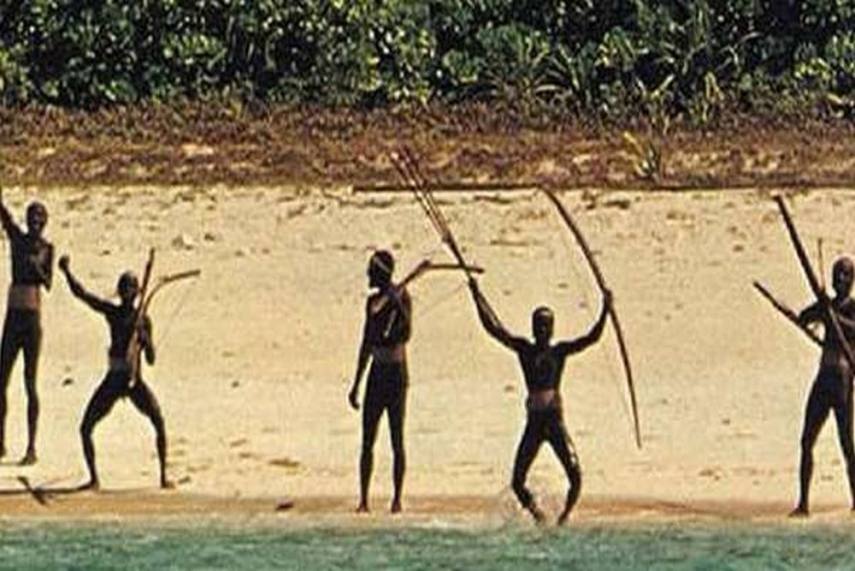
• In a final and chilling description, Chau discusses the weapons the Sentinelese brandished. He reported that the arrows they shot were very thin and sharp, with a metal tip, indicating the metal to be collected from wrecked ships the islanders salvaged. Chau noted that arms in the air seemed to be friendliness, but pointed fingers and arrows loaded meant they were ready to shoot.
Chau died on North Sentinel island, telling nobody but select few of his plan to convert the isolated Sentinelese, and his last Instagram post hours before his death was captioned: “Why does this beautiful place have to have so much death here? I hope this isn’t one of my last notes but if it is ‘to God be the Glory’.”
The first anthropologist to visit North Sentinel, in 1967, was Triloknath Pandit, who was surprised to learn of the death. Pandit was with the first team to establish positive contact with the Sentinelese and is one of the few who can claim to know much at all about the tribe.
“The tribe is not hostile, nor do they raid their neighbours… they only say ‘leave us alone’”, Pandit says. Pandit spoke extensively about his experiences with the Sentinelese in his book, the only written about the island, The Sentinelese. “I feel sad over the tragedy that happened in North Sentinel island. But I am surprised the Sentinelese killed the American. They are not hostile people… they make it amply clear that outsiders are not welcome in their habitat, one needs to understand that language. So anyone who intrudes into their land must not go beyond what they agree with. They give enough warnings; the outsiders must respect that and return. But this gentleman took too much of a risk and possibly ignored their warnings and ventured into the island. He should have returned after they signalled him”, Pandit told media after the death of John Allen Chau.
Pandit’s history with the island is one of the few positive accounts that have been recorded. In 1967, on his first visit to the island, he and his crew from the Anthropological Survey of India in Andaman and Nicobar Islands had no idea that the tribe had the potential to be hostile and attack. As they arrived on the small beach, nobody presented themselves to the party. The Sentinelese hid within the forest, observing from a distance. Pandit’s crew followed foot-marks on the forest floor and came across a clearing with 18 huts. Around the huts, fires were lit and food items such as fruits and fish were roasted. Around the clearing were many bows, arrows and spears, along with baskets for foraging and catching. The crew carefully explored the clearing, finding the open lean-to huts empty of any collected items, produce or treasures. But the clearing was empty of Sentinelese- they had hidden the moment they saw their visitors. One of the crew caught a glimpse of a Sentinelese man, but they did not try to approach them and instead focused on taking items for research purposes and leaving items as gifts. The anthropologists within the crew did not feel that they needed to take items, as having the time to view the huts and settlement had provided them already with enormous research benefits, but policemen who were with the crew obtained some of the weapons left around the settlement. The party left gifts of coconuts, plastic utensils and aluminium for the 40-50 locals they estimated to be living there.
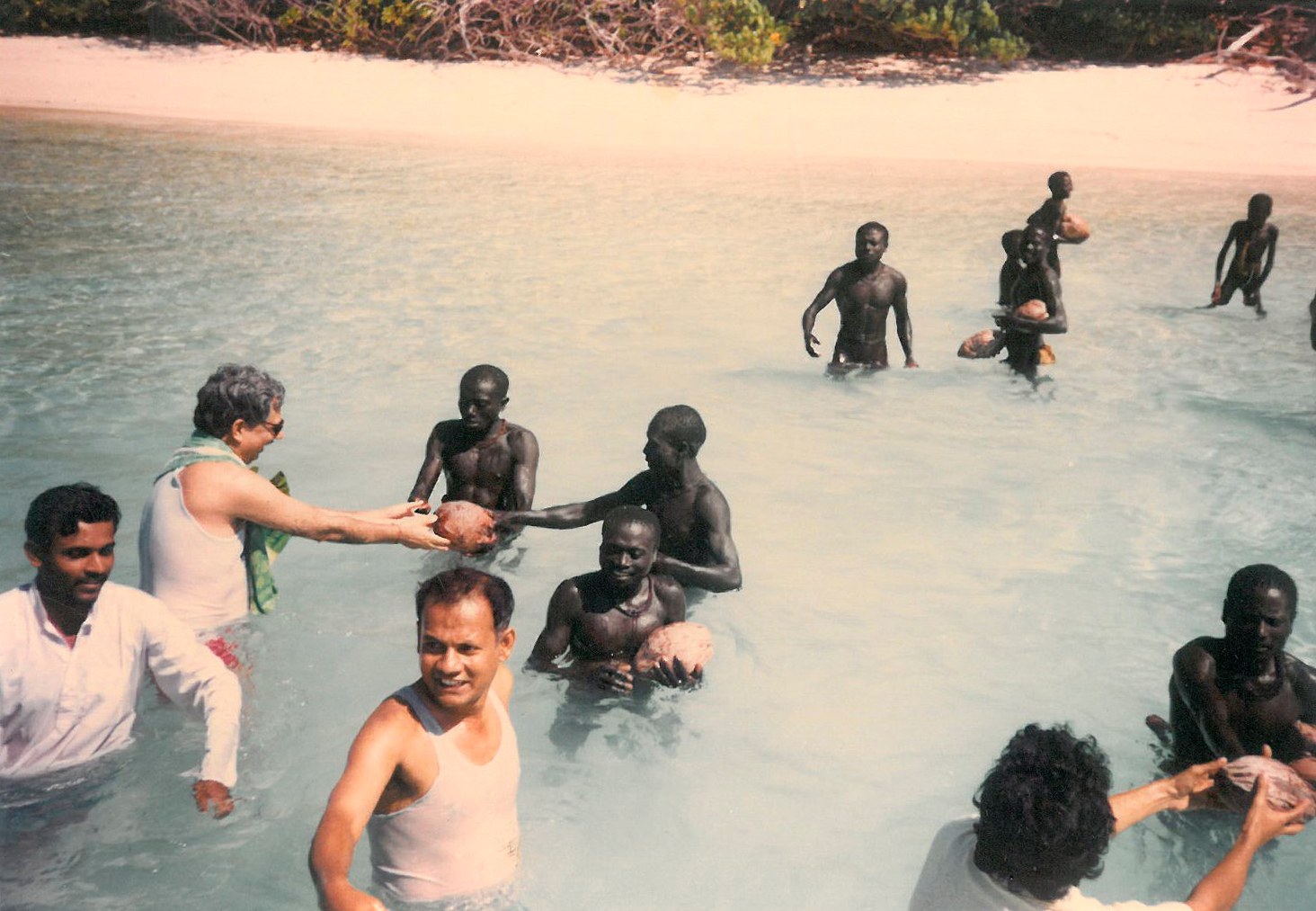
After this first trip, they were met on the beach by the locals on each subsequent visit. Their resistance to visitors was very clear to Pandit- they would come out from the forest as soon as they saw the boat approaching, making gestures and often turning to show their backs to the boat. The warning was understood, and Pandit instead chose to try and offer gifts from the boat. The Sentinelese would allow gifts to be dropped from a distance- buckets with items such as coconuts, candy, cloth, iron rods and utensils, all of which the locals were happy with receiving. But objections were clearly made each time Pandit’s crew tried to push the hospitality further and actually walk onto the island. It took until 1991 for Sentinelese to even take these gifts directly from the hands of the crew, but it was a sign of huge trust that they would have such direct contact with foreigners. On this occasion, a tribesman held a bow and arrow, but a woman pushed the arrow down- this man subsequently buried his weapons in the sand. Upon seeing this act of peace, a number of Sentinelese began to run towards the dingy to directly take the gifts. They also kept up constant attempts to converse with the crew, despite their language not being understood. A few more times in 1991, positive trips occurred, wherein the Sentinelese would wade out into the water among the crew, and a few even climbed into the dinghies to inspect foreign objects. These remain to this day the greatest positive breakthroughs with the Sentinelese people. Still at this time, however, nobody was ever given permission to come onto the island. On one visit, the crew included two Onge individuals (from one of the four major tribes of the Andaman and Nicobar Islands, possibly the closest related in culture, language and society to the Sentinelese) in an attempt to try and translate for the Sentinelese and Pandit’s crew, however at the sight of the Onge the Sentinelese became angered, and visits to the island stopped in 1996 with no real success.
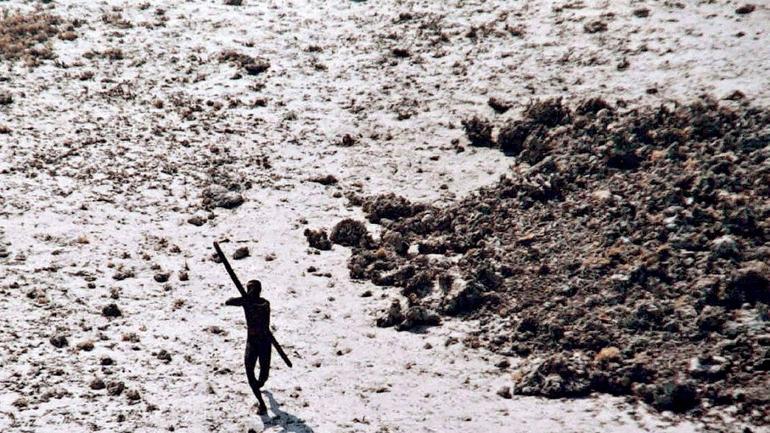
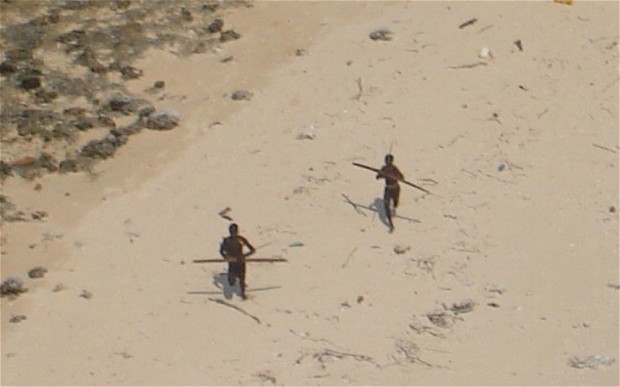
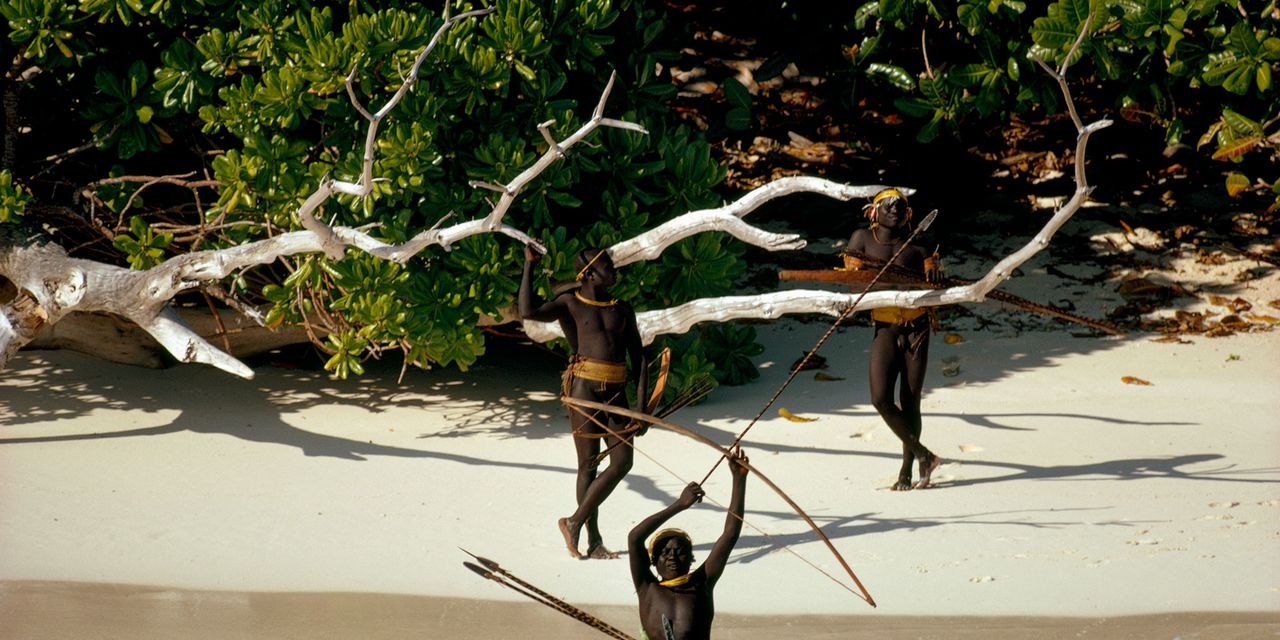
Based on this history of visits, there seems to be a few things that Pandit and his crew did that meant they were not attacked on their first trip, when they managed to not only set foot on the island but enter deep enough to find their settlement. This first visit must have caught the tribe unaware, and they chose to keep their distance rather than attack another group that were almost as large in numbers as they were. However, once this visit had taken place, the Sentinelese knew the crew would be back and from that point onward they kept an eye out for them, meeting them on the beach and refusing entry instead of allowing the visitors to wander in on their own and catch them in a vulnerable moment. This first visit that Pandit made seems to be the only recorded case of anyone successfully making it into the forest without being attacked, and it seems that it was just a matter of timing and numbers that kept them safe. Pandit has been contacted since about how best to reach out to North Sentinel Islanders, when the tsunami of 2004 hit and again when regarding how best to recover the body of John Allen Chau. When the 8.9 Richter scale earthquake on 26 December 2004 triggered a tsunami, researchers and authorities were immediately concerned for the Sentinelese. A tectonic uplift means that previously submerged coral reefs surrounding North Sentinel have been exposed to the surface and deemed unlikely to survive. At the time the tsunami struck, the Sentinelese would normally have been out fishing, which gave government authorities and anthropologists cause for great concern over their welfare, however based on observations made from the air post-tsunami, the tribe seem to have known what was to come and retreated deep into the forest, as no lives are believed to have been lost on North Sentinel during the tsunami. Still, the loss of shallow water fishing on all but the north east side of the island were suggested to have a great impact on the islanders. How much of an impact was truly felt is unknown, given the difficulty in communicating with the tribe. After the tsunami, many authorities attempted to check up on the Sentinelese by flying helicopters low over the island to check for damage, deaths or lack of resources- these attempts were met with hostility and are responsible for many of the images that can be found of the Sentinelese, staring up towards the helicopters, brandishing spears and attempting to fire arrows at the visitors.
Pandit understands his luck the first time and suggests that authorities come up with a strategy that will allow them to arrive at the beach when the Sentinelese are not there. A helicopter, he says, would be immediately obvious because it can be seen from even the far side of the island and can be heard from a great distance- this is documented with a number of photos taken of the Sentinelese by helicopter.
Pandit agrees that ultimately the body of John Allen Chau would be extremely difficult to recover- it’s likely still buried in the sand, and a great amount of observation on the Sentinelese’s movements would have to be done to ensure they aren’t near the beach when authorities arrive. They would need to use a quiet motorboat, be able to quickly locate and recover the body, and if confronted by any locals they would need to understand how to remove themselves from the situation without force. It’s a great risk for both sides involved, and one that has been abandoned by authorities because of this.
Here you can watch some footage taken on journeys by Pandit and his crew.
North Sentinel Island managed to escape the Age of Discovery, the 500-or-so years in which remote islands, lands and tribes were confronted suddenly with envoys of colonisers and foreigners. Laying in the Andaman Islands, which were rarely visited until the nineteenth century, it was not part of the map that ‘discoverers’ frequented, such as the Caribbean or the South Pacific. Its location, size and fierce protection by its locals meant that it was relatively safe from colonisation. Managing to escape this epoch in history, the outside world has until recently managed to mostly stay away from North Sentinel Island, but constantly circles ever closer. The tribe itself remains living as hunter-gatherers, living off fish, crabs, fruits, wild pigs and the eggs laid by turtles and gulls. They are not cannibals, as they have been described by some, however they do often wear the jawbones of deceased relatives around their necks. Interestingly, they have not learned to make fire on their own, instead preserving embers in hollowed out trees from lightning strikes and using these to create bonfires. Pandit, as the current expert on the Sentinelese, worries that if successful contact and communication were to be made with them, they would befall the same fate we have seen play out throughout history to those tribes suddenly exposed to the outside world. The Jarawa tribe, of which Pandit is also an anthropological expert and has spent many years advising after friendly relations were established in the early 1970’s, have struggled since integration into wider society with disease, drug addiction and constant hostility towards and from outsiders. For many years, officials had to discourage the curious and the nosy from attempting to visit North Sentinel; Jacques Costeau was chased away from filming a documentary there, and renowned anthropologist Claude Levi-Strauss was refused access for he and his students to begin fieldwork there. Today, fishermen and other outsiders continue to push the boundary that surrounds North Sentinel, often straying into its waters to gather crabs, lobsters and other food that the Sentinelese need.

Increasingly, questions are asked about the safety of the North Sentinelese, the safety of others who pass through the surrounding ocean, and what should be done, if anything. Contacting the Sentinelese and attempting friendly communication could help them to protect themselves from gangs of pirates and outlaws that roam the area, from the fisherman who increasingly push the legal boundary into Sentinelese territory and threaten to out-fish the reefs, and from future environmental disasters. In 1980, Andamanese officials relayed these reasons as to why they would be attempting to bring North Sentinel island further into the Republic of India and the modern age. Pandit’s visits were part of these regular parties sent to attempt to make friendly contact with the locals, and based on Pandit’s interviews, we know these attempts failed. While efforts have been made to establish contact with the tribesmen, we also know at the very same time that making contact means destroying 70,000 years of culture, tradition, history and society. It means introducing diseases against which the Sentinelese have no immunity, addiction, and perils that the Sentinelese have no idea even exist. With contact, we may be able to help them should anything else happen to threaten their wellbeing, but we would only be introducing our own foreign evils. We have always thought ourselves to be doing the right thing, offering gifts to attempt to get on the same page as them, but if this ever actually happens it will be the end of Sentinelese life as they know it to be.
As it stands, the Sentinelese are the one remaining community that has had such little contact with the outside world. Every so often, a story will emerge of a “lost tribe” of people, usually in the Amazon or Pacific, and will inevitably reveal that the tribesmen have actually lived alongside modernity for years, with cigarettes and Coca Cola t-shirts stored back in their huts. It seems the ‘lost’ tribes that have managed to remain have never been lost, merely hiding and unwilling to mingle with interlopers. When Pandit experienced the few documented friendly interactions with the people of North Sentinel Island in 1991, he says he felt thrilled that they had made the decision to go forward, but that there was also sadness in these moments.
“…there was the feeling that at a larger scale of human history, these people who were holding back, holding on, ultimately had to yield. It’s like an era in history gone… They would not have survived forever… on a scientific basis we can say that this population might have lived for another hundred years, but eventually…”
 Death Imitates Art
Leave a comment