When I talk about death and anthropology, two of the things I study and look at, I get asked pretty often: “did you like Dark Tourist on Netflix!?” This is kind of a difficult question to answer. I mean, to speak of the show itself, I didn’t like it that much. But it has brought to the attention of a wider audience what exactly dark tourism is and what kinds of implications it has.
To give a brief definition, dark tourism is a specific type of tourism that involves visiting locations associated with suffering, tragedy and death. The Netflix series Dark Tourist sent journalist David Farrier to a number of these locations to experience them for himself and report on what the experience was like.
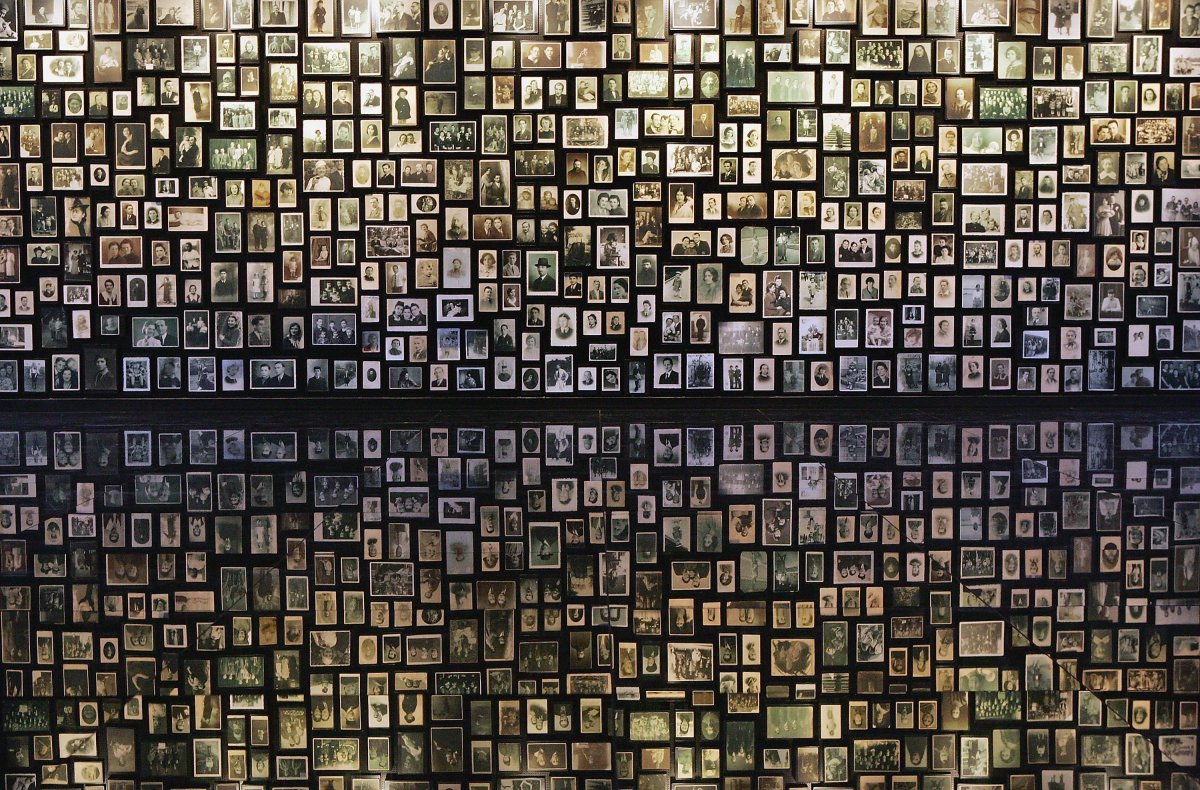
The questions this show, and dark tourism in general, are raising are ones that are becoming more and more asked- is dark tourism okay? Is it acceptable to enter a location or participate in something that is based off human suffering and misfortune? Is there a right or wrong way to be involved with this?
We can take a look at Auschwitz for example. We’ve just passed the 75th anniversary of the camp being liberated, January 27th 1945, and for many people this location is the first to be thought of when discussing dark tourism. The most notorious of the Holocaust death camps, Auschwitz, receives over one million visitors each year. These visitors take photographs of the train tracks that brought carriages of Jews to their death, the infamous ‘arbeit macht frei’ (‘work sets you free’) gate entrance, piles of glasses, shoes and belongings taken from prisoners, and even the crematory ovens. The question of acceptability is perhaps a little blurred when it comes to taking photos such as these, wherein context is important. If a visitor is taking photos for the sake of having a photo, and not taking in their surroundings, the history and the importance of the location and its past, then they’re not exactly the kind of visitor that’s wanted at such a site. However, the line is completely crossed when visitors wear shirts with inappropriate slogans, make out in former barracks, take videos balancing on the train tracks and cheerful selfies around the concentration camp. Visitors have been known to do all this and more, and Auschwitz is not the only place with a sombre past to be treated with such low levels of respect and honour.
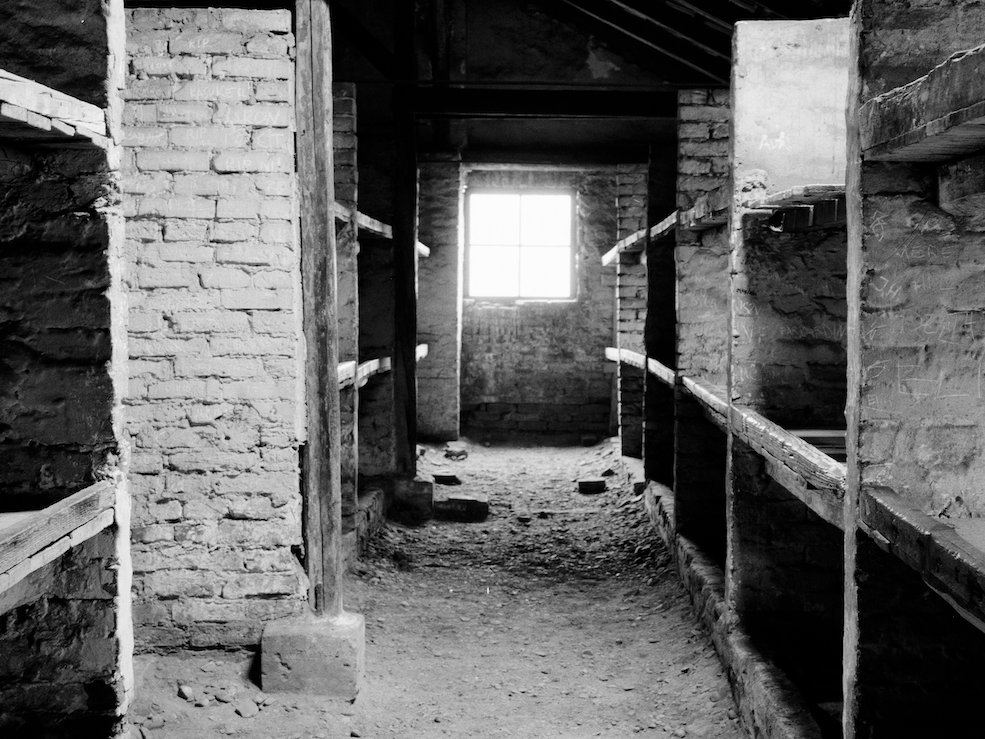
The fascination with visiting Auschwitz is not new- in fact only a few short years after its liberation it was a site to see for curious photographers and those interested in the events that had passed there. As time has gone on, our collective knowledge of the events of the Holocaust have grown, and so too have our exposure to stories of what occurred there. Films such as Schindler’s List created a noticeable increase in tourism to the area, with newly-aware individuals keen to see a location of such significance. Since the end of World War II, the memorialisation of concentration camps such as Auschwitz has been a topic of debate. While having tourists file past rooms where thousands were tortured and killed is often thought of in bad taste, it has been ultimately decided by most that the education, remembrance and collective memory provided by these places outweighs the somewhat troubling means by which they are imparted on visitors.
Photographer Roger Cremers created a photographic series on how people confront World War II in the modern day. This series included a number of photos of tourists at Auschwitz, provoking mixed responses on correct behaviour and ways of dealing with the past at historical sites and monuments. The series shows the distance that we find ourselves held at by time: after 75 years, after having only learned about this part of history through textbooks and teachers and not by having lived it ourselves, distance between what was and what is, grows. A tour guide, umbrella raised in the air, leads her group in a march through the camp. A young boy in a skull t-shirt cleaning the headstones of holocaust victims, Jewish men in nice suits talking on cell phones within the camp walls, groups that re-enact events and battles that occurred within living memory as though they’re playing a grown-up game of soldiers. Can we see the irony of these images? Can we see the change that has occurred in less than eighty years? Is the past so long ago that we feel disconnected to the victims and begin to think it’s okay to urinate on fences at Auschwitz and grafitti the walls at Dachau?

Fellow artist Shahak Shapira has also created a photo series based on the modern tourist at sites of dark past events in his series ‘Yolocaust’. Shapira searches social media for disrespectful images posted from the Holocaust memorial in Berlin, and superimposes a background from photographic archives of former concentration camps. The result shows the stark difference between the history of an event such as the Holocaust, and the way it is often put aside for a disturbingly light-hearted photo opportunity.

The questions about dark tourism go hand in hand with questions I’ve been asked about recent death compared to historical death. Displaying human remains, discussing personal life details that were not publicly shared during an individuals life, or ‘how soon is too soon’. To this, and to many other aspects of death, I would say there’s a big difference between curiosity and entertainment. The difference has not always been clear, and to some it still isn’t. But put simply, curiosity should be encouraged and entertainment should not. Academic Phillip Stone created a scale by which sites of dark tourism could be ranged between the kitsch and entertaining, and the solemn and educational. According to Stone, ‘dark camps of genocide’ such as Auschwitz are at the top of the list of locations that represent ‘darkest’ and most ‘authentic’.
Some have argued that motivations should be taken into account for tourists who visit dark tourism hot-spots. After all, doesn’t a Holocaust survivor have more right to visit a former concentration camp than a social media influencer? Does a site become compromised when it allows general tourists to visit, rather than if it had only allowed those with academic or historical connections to visit? When looking at the motivations of tourists who visit, some speak about their rationale with amazing clarity. Tim Cole spoke about visiting by saying:
“We were tourists of guilt and righteousness: guilt at an almost pornographic sense of expectancy at the voyeurism ahead. And yet guilt tempered by a sense of righteousness at choosing to come to this place”.
As quickly as the 1950s, visitors stated that these sites were becoming nothing more than locations for curious tourists and had little to do with remembrance, with buildings restored and exhibitions installed that provided additional information and education for visitors yet took away from the brutal reality the site had been left in. But this has been stated by officials as a necessary move. Survivors, loved ones and ancestors of victims, and those with a religious affiliation are the smallest of the three main groups that visit Auschwitz, with the numbers of this group that visit diminishing every year. Soon there will come a day when no more survivors will visit to see what has become of the camps. At that point, education and clear presentation of evidence, facts and anecdotes will be more valuable than the physical preservation of the brick and mortar of the site itself. The two other main categories of visitors are educational- scholars, academics and school groups- and those who visit casually, as part of a tour, or because they are in the area. While it’s easy to write off this last group as the crowd that has the least right to be there and the least connection, many in this group describe a feeling of obligation to visit if they are nearby, to pay respects and to learn. However, this group also brings with it those who have no real interest, or worse, neo-nazis. What can be said without doubt is that the number of visitors and the behaviour of some of them can often lead to other tourists being unable to fully focus on the site as one of memorial, learning and reflection.

To be curious about death, about human suffering, about experiences we have never had ourselves and that we wonder about having to go through, is very normal. This curiosity has always been with us, as part of survival and part of the human experience. To hear stories from survivors of the Holocaust, or of a hurricane or tsunami or earthquake or massacre, makes us imagine the horrors. We imagine ourselves in the situation, imagine what we might have to do to survive, imagine what terrible circumstances we would be placed in. By visiting the sites of these tragedies, we can see more clearly what others went through. We can see how awful an act was, how violent or how terrifying, see the evidence of it occurring. We can empathise with those who suffered when we put ourselves where they were, take the time to hear their stories and view their grief. The curiosity we have about these tragedies is not something to be ashamed of. But changing curiosity into a spectacle for entertainment is. When we no longer allow ourselves to connect to the historical relevance and the humans who were put through these ordeals, when we begin to ignore the reality of these sites of dark tourism, we instead focus on ourselves and not those that it impacted. The entertainment value of a site should never be at the expense of those who suffered there, it should never make light of historical suffering and should focus on the humans who survived and did not survive in these places, not on those who are now visiting. What you need is not a photograph of you smiling with your friends at the 9/11 memorial, or performing parkour on the cubes at the Holocaust memorial. What you need is to remember why these places exist, engage your curiosity in a respectful way and only share images from these sites if you have something a little more insightful to say than: “so sad!! #auschwitz”.
What do you think of dark tourism? Is it an important teaching tool, a disrespectful spectacle or something in between?

Sources:
“‘Yolocaust’: How should you behave at a Holocaust memorial?” by Joel Gunter
‘This is what concentration camp tourism looks like’ by Emmie Giesbergen
‘Tourist behaviour in Auschwitz’ by Roger Cremers
“‘Yolocaust’: A satirists challenge to Holocaust tourists’ behaviour” by Euronews
Sarah Hodgkinson, « The concentration camp as a site of ‘dark tourism’ », Témoigner. Entre histoire et mémoire [En ligne], 116 | 2013, mis en ligne le 01 juin 2015, consulté le 28 janvier 2020. URL : http://journals.openedition.org/temoigner/272 ; DOI : 10.4000/temoigner.272
Derek Dalton 2009, ‘DARK TOURISM: Encountering Auschwitz: A Personal Rumination on the Possibilities and Limitations of Witnessing/Remembering Trauma in Memorial Space’, Law/text/culture, vol. 13, pp. 187–356.
 Death Imitates Art
Leave a comment