
When you travel, what’s your ‘thing’ that you love to do? Are you somebody that likes to visit the museums? Do you book a tour with a resident of the city to get the best insight? Do you try to taste all the local dishes? Please let me introduce you to my ‘thing’ and hope that you’ll keep it in mind on your next trip… visiting the dead.
June of this year I spent in Italy, sight-seeing, job hunting and drenching every seat I encountered with my sweat. Last time I was in Europe it was the dead of winter and the challenges were more to do with the fact that I’d never encountered snow in my life. I wasn’t yet aware that if you’re a keen tourist and up before everyone else, that means nobody has been around to salt the walkways yet and you can very easily slide the entire length of a street before a parked bike is able to stop you sliding into traffic. Besides these issues, I was excited to put on my four layers of clothes and head out for a full day every single day to take in everything at my own leisure. But Italy in summer? Suddenly I was in the place I loved most in the world but felt a lot of hesitation about going out each day. The heat was humid, which was so different from the dry heat of a South Australian summer, and I had absolutely underestimated the hordes of tourists. I’m used to being able to search for local experiences and be able to have them without masses of other tourists being around for it, but somehow no matter where I went or how obscure my activities, there were still endless people.

Venice, my first stop, is a place where the locals know maybe better than anyone that tourism is both a blessing and a curse. While the industry brings in enormous revenue, it also raises the cost of housing and daily living which in turn drives out the locals who can no longer afford to live in their own city. (Every year the city is visited by 20 million tourists and every year 1,000 locals are forced to leave… isn’t that crazy!?) The charming little narrow alleys of Venice are not so beautiful and characterful when you’re scooting along them sideways like a crab, trying not to have skin-to-skin contact with any of the hundreds of others who are just as visibly sweaty as you are.
So I can’t begin to tell you what a relief it was, the day I was on a vaporetto between Murano and Cannaregio, to see Cimitero di San Michele. I remembered it from my last visit: an entire island dedicated to house Venice’s dead. But last time I didn’t have long enough in Venice to see it, and this time I did. So I went to Cimitero di San Michele. And that’s what this post is about!
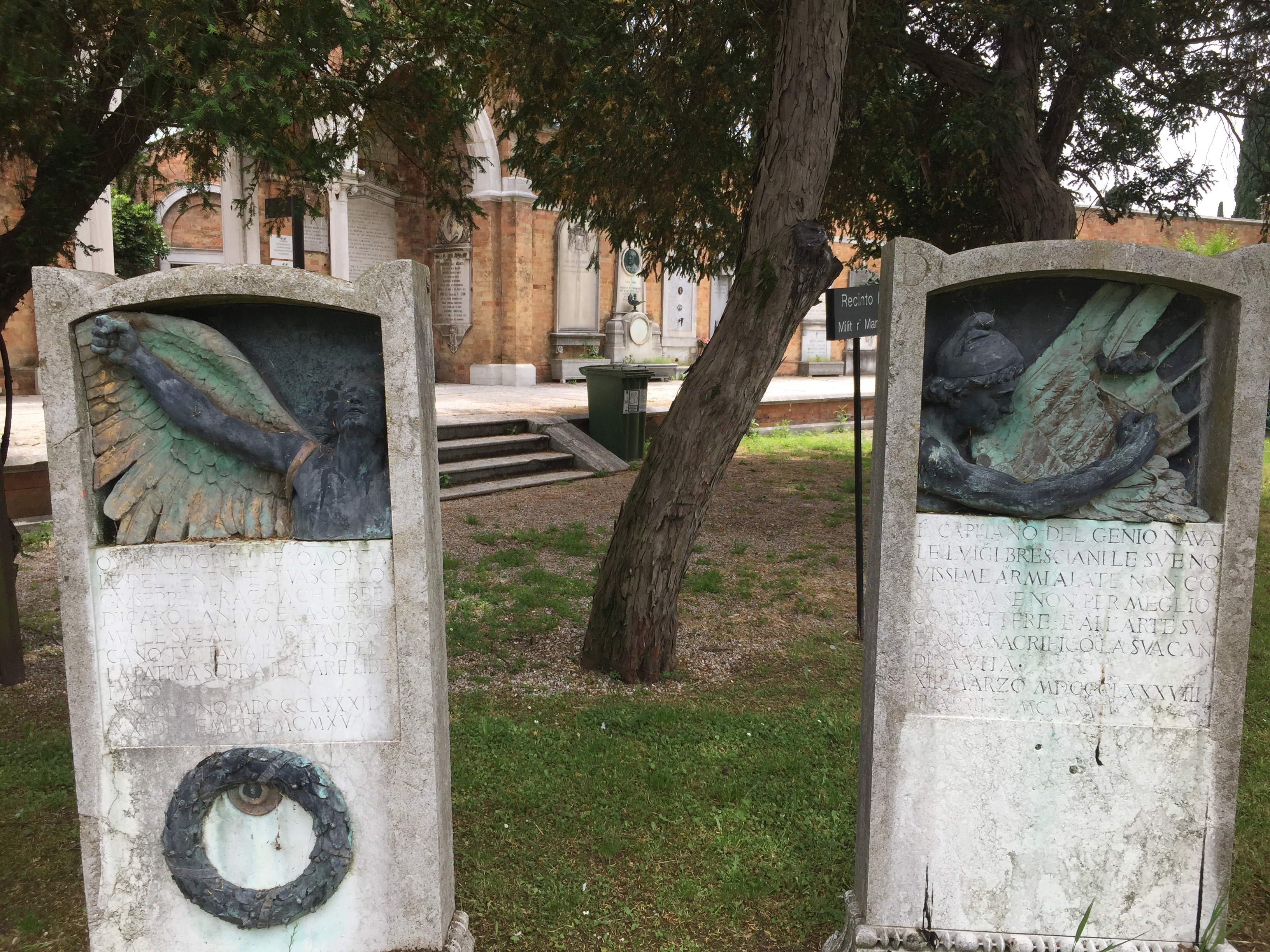
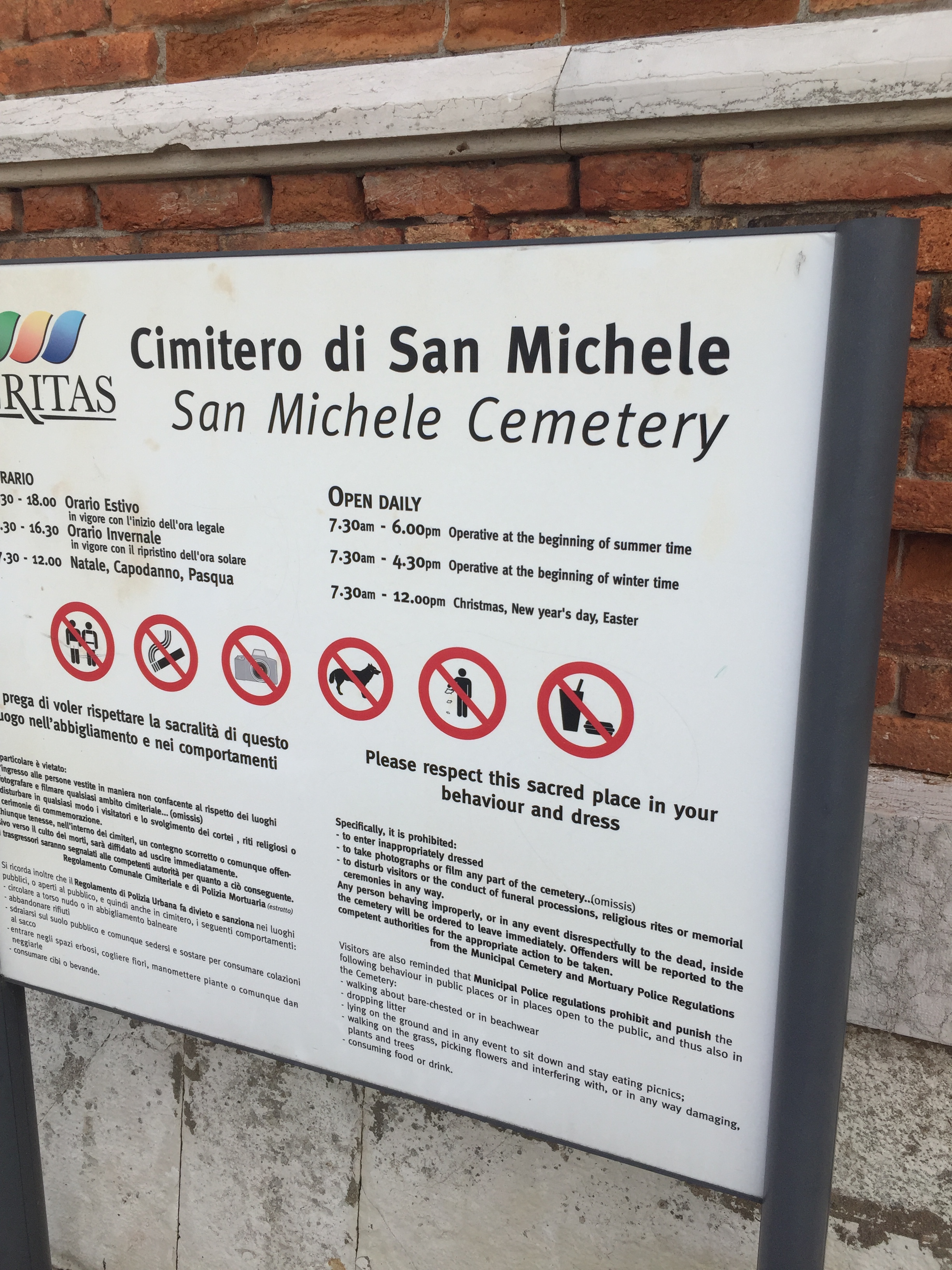
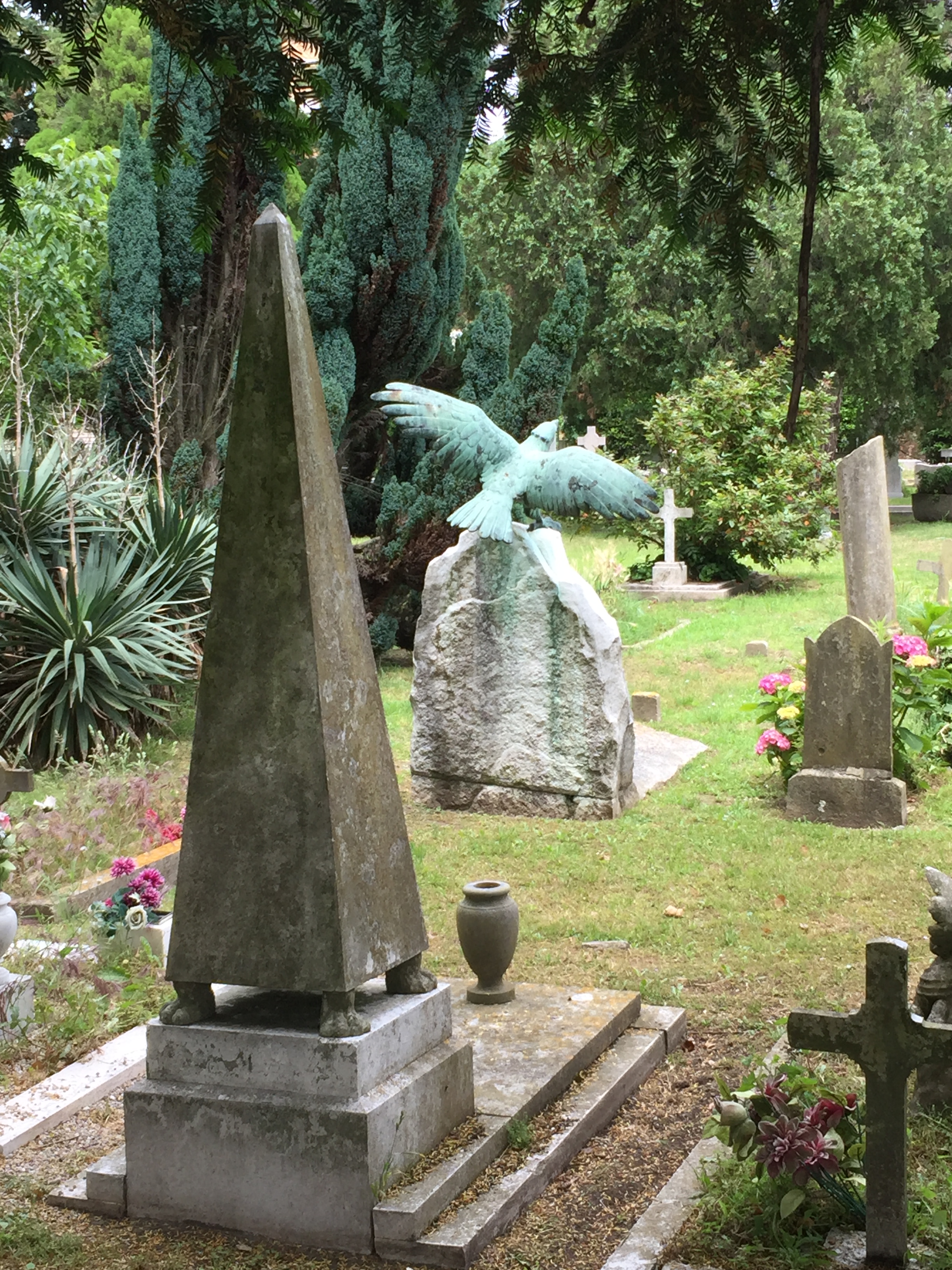
I have to preface by saying: taking photos at this cemetery is not allowed. The quality of these images is therefore low as they were taken on my phone in moments when I was completely away from anyone- these cemeteries may look old and some areas may be a bit run down, but they are still in use and the last thing a visiting family member wants to see is yet another tourist snapping pictures. So please take note of the rules.

Isola di San Michele, the island itself, has long been inhabited by Camaldolese monks, who in 1469 had the Chiesa di San Michele built next to their monastery- one of the first signs of the renaissance in Venice. When Napoleon invaded Venice in 1804, he declared it unsanitary for the dead to be buried on the main island, and this is when Isola di San Michele was designated as the official cemetery for Venice. A few decades later, the island merged with the island of San Cristoforro Delle Pace to create more space for burial plots, creating the man-made rectangular shape that it has today. In 1995 burial space was at capacity, and rules were introduced meaning that residents can be buried for 10, 20 or 99 years, depending on the plot, and then are moved or cremated. The Franciscan monks have since abandoned their monastery on the island in 2008, and instead 80,000 dead reside on San Michele.

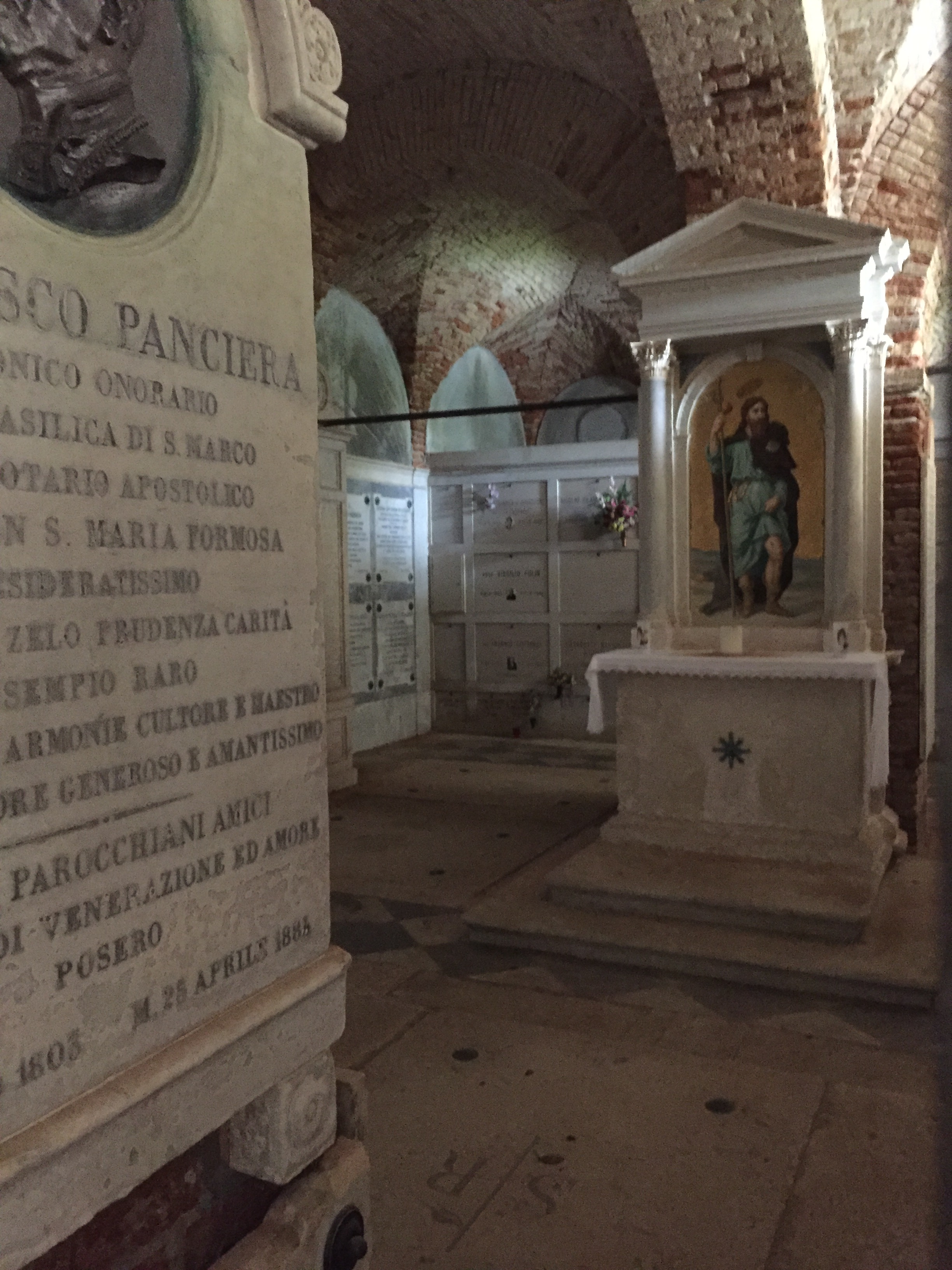
If history is something you’re interested in, a trip to the local cemetery can teach you a whole lot. You can learn so much about those who have lived in a time or place just by visiting their graves, and there are so many online services set up to help you continue research if you find that a particular person or grave has stuck in your mind. Cimitero di San Michele holds the remains of influential people such as Igor Stravinsky, Christian Doppler and Ezra Pound, which are all interesting graves to visit while there. [Click here to see a short clip of the gondola hearse taking Stravinsky to Cimitero di San Michele in 1971] But you also have the added bonus of doing some really interesting sightseeing while managing to avoid 99% of the tourists. I saw maybe 10 other people on the entire island for the two hours I was there, and we were all just quietly walking around and keeping to ourselves.

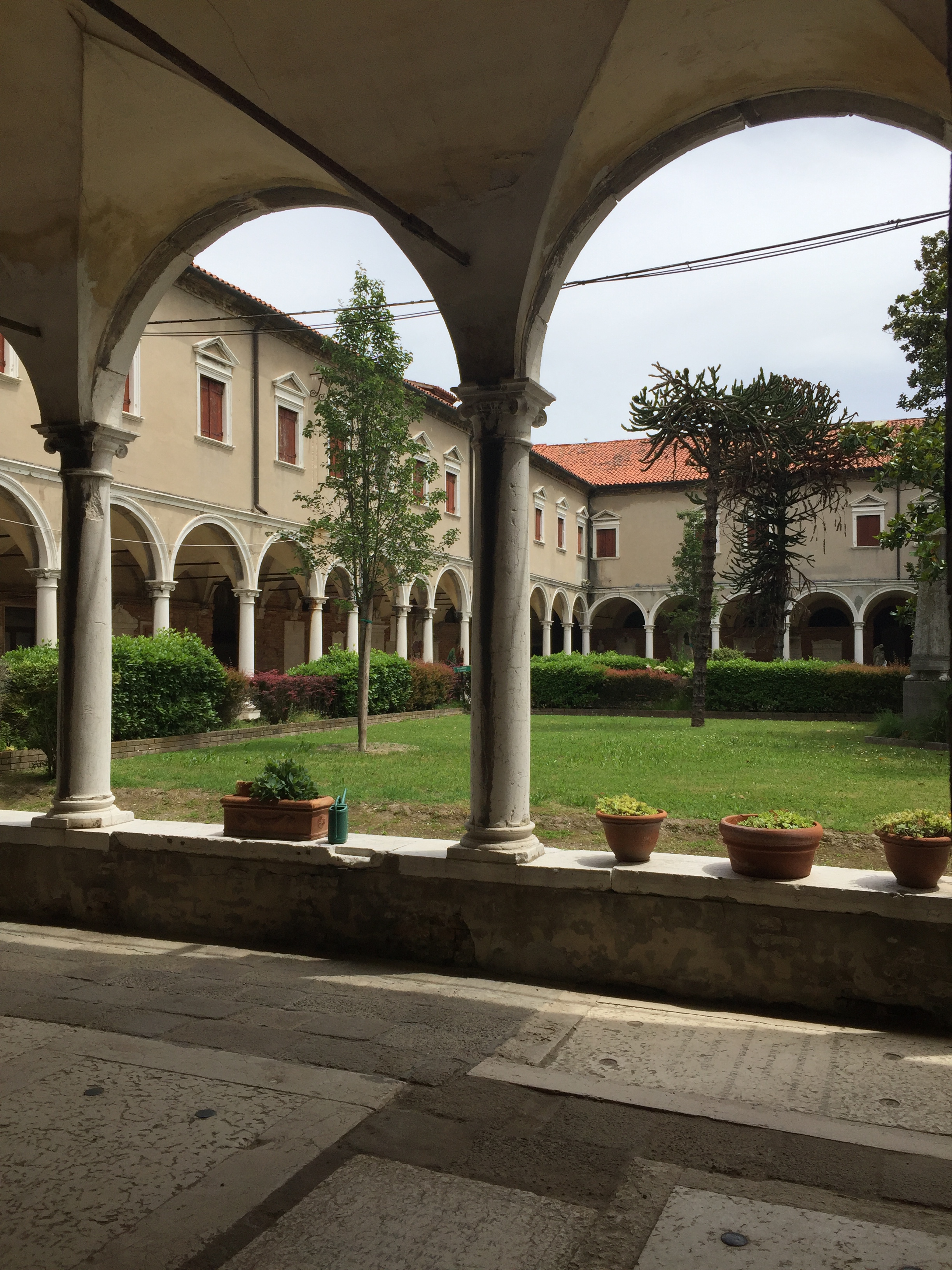

One of the things I loved the most about San Michele was how the different areas of it had such different feelings. Some parts were open grassy fields where wildflowers were beginning to bloom, and other parts were old, dusty crypts. Every area was beautiful in its own way.



Visiting San Michele
You can get the vaporetto 4.1 that runs towards anti-clockwise, or the 4.2 that runs clockwise between the main island and Murano. Cimitero is listed as one of the stops and you’ll definitely know when you’re there. The vaporetto runs pretty regularly but please note that there is only a toilet and a vending machine on the island, so you should bring your own bottle of water. Picnics are forbidden, so you can’t bring food and expect to be able to sit somewhere shady and eat here. Dress rules for visiting the cemetery are the same as for churches in Italy- shoulders and knees should be covered. And please keep your distance from others in the cemetery when possible- either they’re mourning family or friends, or they’re tourists like me, just wanting to be alone in a cemetery for a while.

 Death Imitates Art
Leave a comment