
My introduction to Baba Yaga was along the same lines as my introduction to the Russian revolution: I watched and loved Anastasia as a kid, and then I subsequently watched the rarely spoken-about sequel Bartok the Magnificent. Who knew a Meg Ryan movie and its straight-to-VHS sequel about a lost princess and a sometimes evil sidekick bat would encourage an unhealthy interest in the Romanov family and Slavic folklore about an Eastern Russian witch?
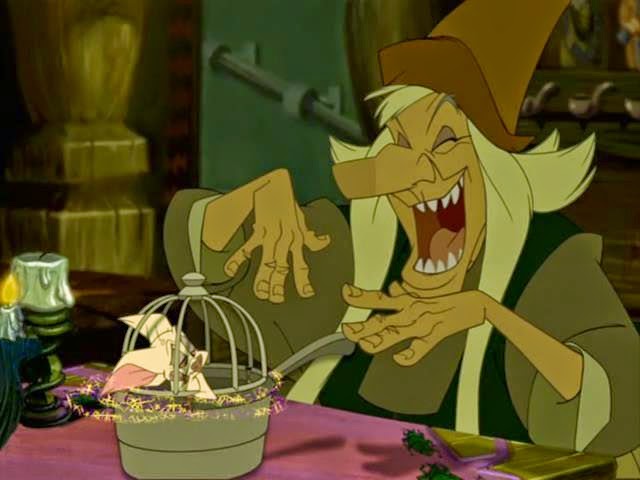
[Side note: Just seeing a picture of the bear in this movie felt like a nostalgic fever dream, so luckily you can watch the whole movie online!]
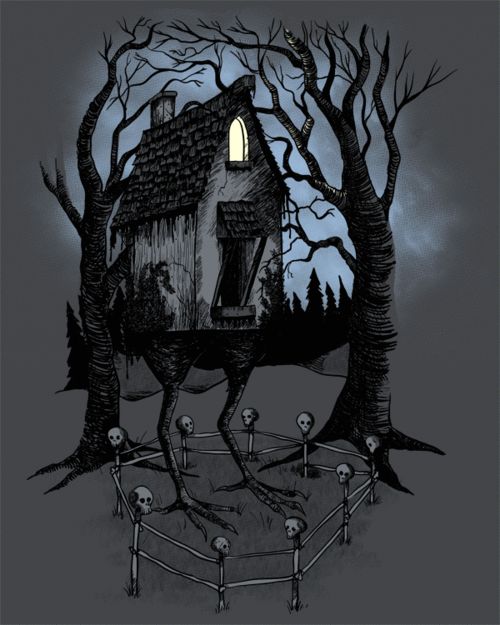
So what exactly did I know about Baba Yaga up until earlier this year, based on my very limited exposure with her? She was an old woman who lived in a house on chicken legs, could fly in a mortar and pestle, was able to use magic like any old witch and despite seeming mean and evil at first, was actually quite helpful and kind. And then I had a very vivid dream one night- her wooden house had glowing windows like eyes, and the chicken legs that held it up were constantly moving so that it couldn’t be climbed. It was in a clearing surrounded by a bone fence topped with skulls that had glowing yellow eyes. In the dream I understood Baba Yaga as somebody who could help or hurt me, depending on her own whims. She collected mushrooms, herbs, bark and insects from the forest each day to keep in jars in her home and use for her witchcraft, and she knew exactly what to make for anything she wanted to do. Her windows kept watch over her surroundings, with them she could see anybody coming, and they had to be worthy to be able to access her front door. She was all-seeing and all-knowing.
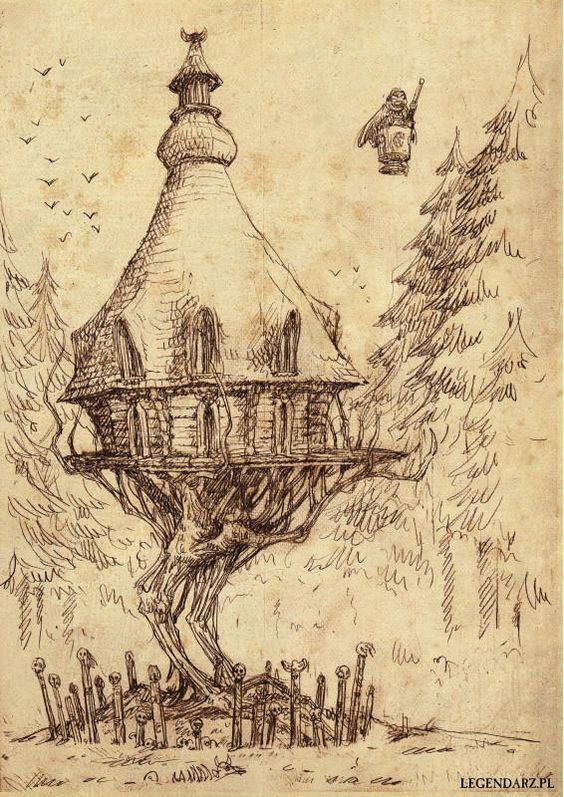
The dream was so vivid that when I woke up I knew I had to find out more about who Baba Yaga was meant to be; was she like Rasputin, an other-worldly but real historical figure that was prone to attracting fantastic stories? Or was she a legend, added into a Russian-themed movie in the 90s and brought up again years later by my sleeping subconscious? It turned out, my subconscious somehow knew eerily accurate details of the folklore surrounding Baba Yaga, things I had never known before but now I do know and want to share.
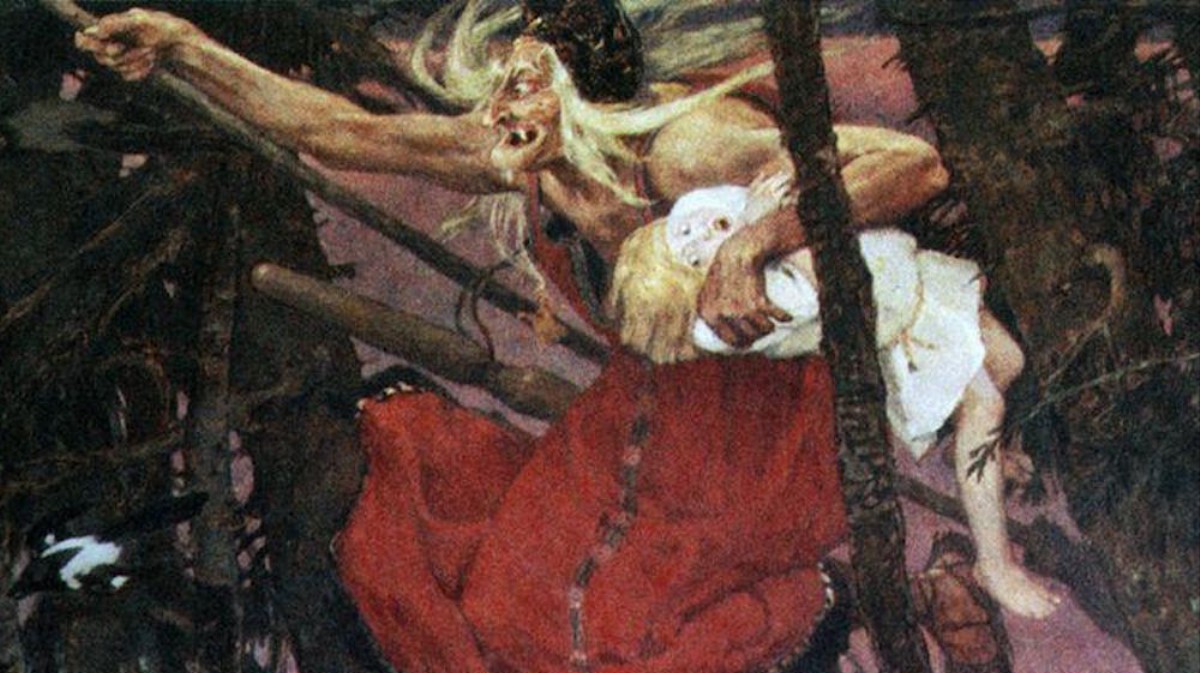
You see, Baba Yaga is not just an old witch, she’s symbolic of two things: both nature and death. If she asks a question and you answer correctly, she can decide to help you. But she can also decide that you aren’t worthy, that the time isn’t right or simply that she doesn’t feel like it. And worse yet, she can decide to actively harm instead of help or dismiss you. Let’s focus on the obvious side first: she can be bad. She displays the remorseless impulses of long winters, plagues, famines, natural disasters and other tragedies that pick and choose who they will claim, not caring for class, race or societal standing. There were of course acts that were believed to keep such disastrous deaths at bay, maybe a certain prayer at a certain time of day or a particular herb rubbed on the body, or avoiding specific animals. But these were beliefs that would prove unfounded- if death, disease, illness, disaster came for you, then none of these things could actually prevent it. Baba Yaga works in the same way- she can’t be tricked by a prayer or bible verse, she can’t be warded off or be made unable to touch you if you carry a talisman. If you stumble across her in the woods and she feels like doing so, she might cook and eat you.
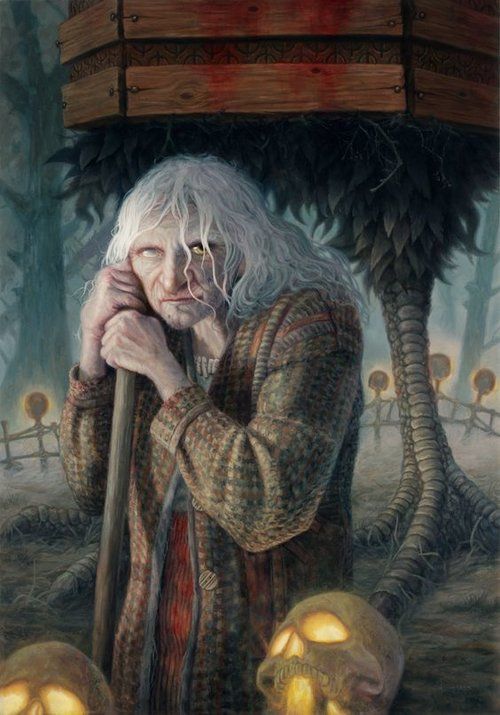
And yet, she is a grandmother, a helper, the only one a hero in a story can turn to in times of real need. She helps young women to learn basic skills they would need; sewing, cooking, cleaning. She helps young men to pass the tests they need to prove themselves as men. She can control weather and animals, she has domain over the forest and water, she owns magical items such as mirrors, scarves, combs and rings that will give the hero help when needed. If she decided to help somebody, they would know her not as death but as life, or even rebirth. She would be a second chance, a new start, a fresh opportunity. Her sacred knowledge and sight of all things helps to bring life to the world as well as to escort the dead to the afterlife.
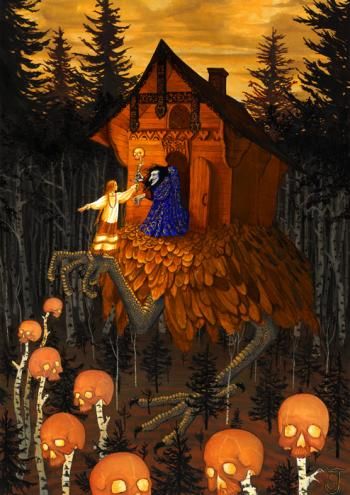
Baba Yaga is a difficult character to portray and understand because she doesn’t fall into one category or good or bad, motherly figure or evil hag. We can never know her, her motives or her story because she will never encapsulate one type of woman. She can’t simply be the woman who seems mean until you realise she is nice in a movie featuring talking bats. Her home is a womb for some, keeping them safe until they are ready to emerge, but for others it is a tomb. Her oven, always warm and burning, could be used to cook a child or to warm the hands of a weary traveller. She displays features and characteristics of death, decomposition and life, but without a moral compass. For many historians of Slavic folklore, these startling descriptions of Baba Yaga are not actually that surprising.
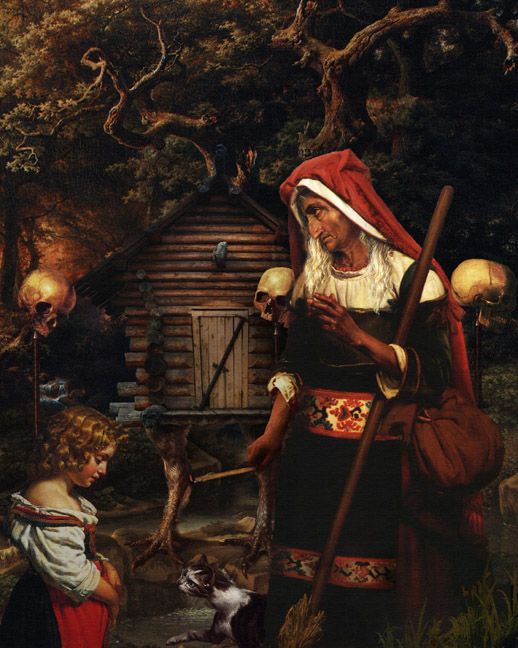
She chooses to eat people? Well, sure- in Slavic folklore, Mother Earth eats her own children. Polish legend dictates:
“God ordered the Earth: ‘You will give birth to people and you will devour them; what- ever you give birth to, you will eat, as it is yours’”
Her house, surrounded by bones, high on a wooden platform in the forest Włodzimierz Szafrański writes that traditionally, this was the setting for a pre-religious burial. Bodies were buried on platforms and raised above the ground, to better preserve the bones which would later be collected and cared for. The buildings these bones were later moved to also housed food for the dead, and looked quite similar to Baba Yaga’s house too.
The thread she uses to teach young women to spin? It’s made of bones and entrails. So yeah she’ll help you learn to be a woman, but don’t expect your new start not to have any basis in a death first.
Baba Yaga’s hut is a liminal space; the hero has to leave their city to travel through a forest and search for her house. They have to pass tests before they can even gain entry. Once inside, they are Schrodinger’s cat; they are inside a seperate space, and may now be dead or alive, but the outside world has no idea. Baba Yaga may decide to help them or harm them. She could be heaven or hell, birth-giver or death-bringer; in her own domain she can do as she wishes.
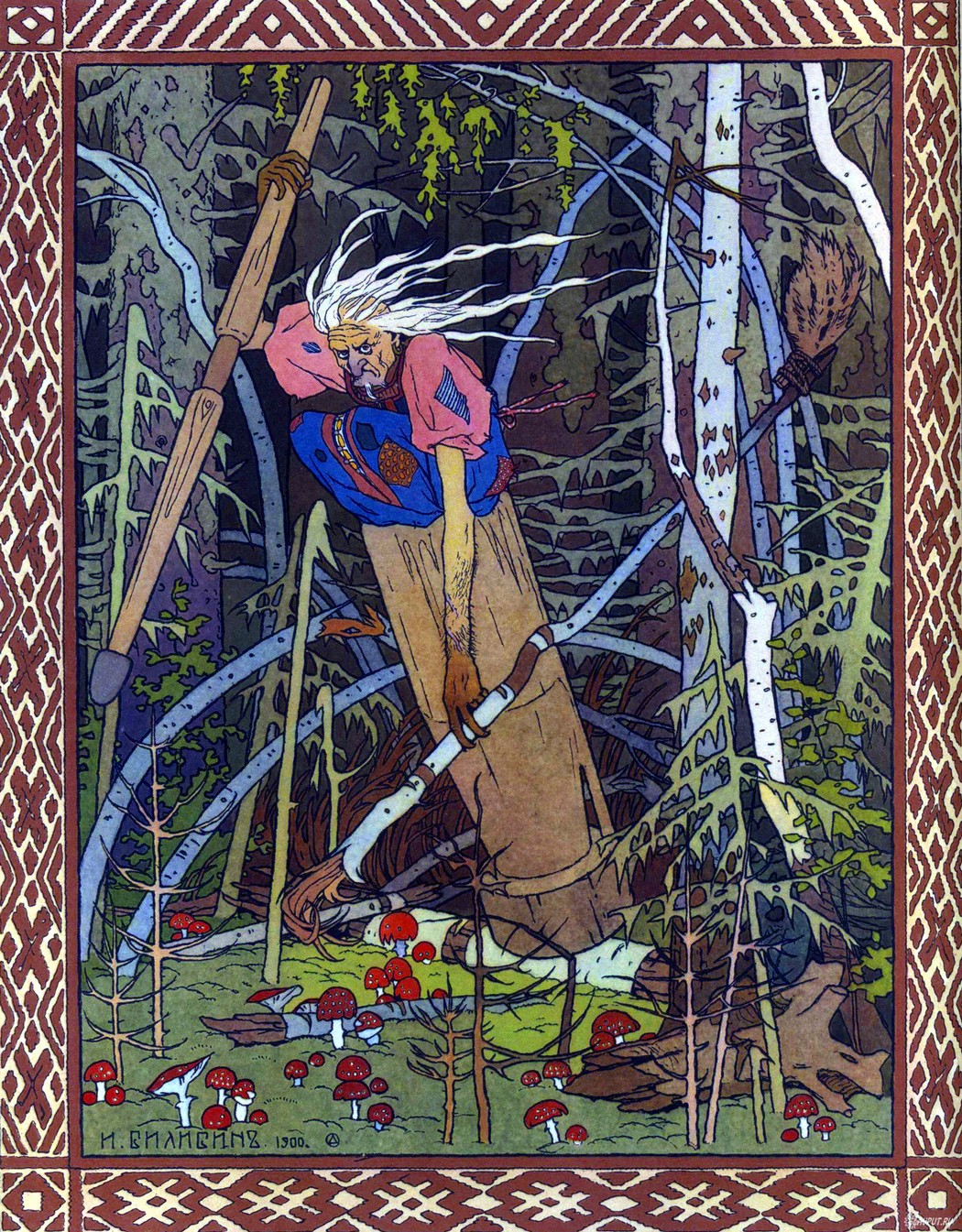
Oh and what is Baba Yaga not? Um John Wick…
So if you were in a beech forest in Eastern Europe and came across a house on chicken legs, surrounded by a fence made of bones, would you try to enter, knowing it could be the biggest benefit to your life? Or would you turn and run, even though her window-eyes would have already alerted her to your presence?
Sources
Fierce Feminine Divinities of Eurasia and Latin America: Baba Yaga, Kali, Pombagira and Santa Muerte. 2015. SpringerLink.
Jonathan Durrant & Michael D. Bailey, Historical Dictionary of Witchcraft, 2012, Scarecrow Press.
Sibelan Forrester, Helena Goscilo, Martin Skoro, & Jack Zipes. Baba Yaga: The Wild Witch of the East in Russian Fairy Tales, 2013, United Press of Mississippi
Marion Steel, The journey to Baba Yaga: an uncertain landscape into light and dark, 2013, Existential Analysis.
 Death Imitates Art
Leave a comment