This post contains some graphic images below.
Kodokushi or “lonely death” is the Japanese word for the increasing phenomenon of the elderly and forgotten dying alone, and their bodies not being discovered for some time. Kodokushi is a distressing topic for most because it combines two elements we try to avoid considering: being alone in life, and being forgotten in death.
Those who fall victim to kodokushi are almost always elderly men, many of whom have retired and do not have family or friends around to look after them. Some have been ostracised by society, and others have purposefully shut themselves away. Regardless of why, they find themselves alone late in life and have nobody to check in on them. When they die, their death is not acknowledged until their surrounding neighbours smell them. An accumulation of mail at their mailbox and lack of recent activity are also warning signs for landlords and neighbours.

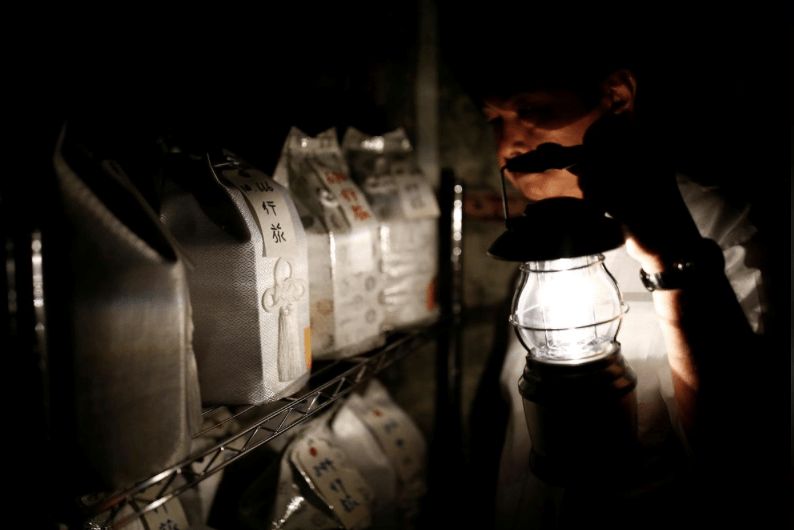
When their bodies are discovered, they are taken to the morgue where mortuary workers will attempt to contact any family or friends who may be able to claim the body. Usually in these cases, no relations can be found and the body is held for a time until it is cremated and put with the rest of the unclaimed urns.
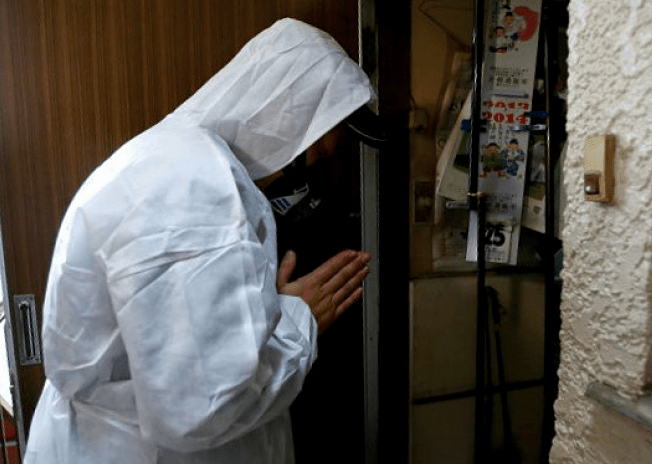
The apartment or home will usually need a thorough cleaning after a body is left unattended inside, and depending on the stage of decomposition this cleaning can be quite extensive and floors, cupboards, tiles and objects may need to be removed and destroyed. This level of cleaning is a business all in its own, with multiple documentaries showing the difficult work done by these cleaners. Their job is not simply to scrub and scrape, but also involves confronting the remaining items of the deceased, learning about who they were and having to erase all evidence they ever existed.

Kodokushi happens for so many reasons in modern Japan. Many people move away from their families to be able to work, and when they finish working they may not feel able to move back and accept help from their families. Asking for and accepting help in Japanese culture has always been a difficult thing to do. Japan also has social rules surrounding social interactions with strangers, making it rare for neighbours to interact unless necessary. In cities where apartment buildings can cram hundreds of units into one plot of land, it would be easy to assume you’d get to know your neighbour pretty well. But in Japan, it doesn’t always happen.

Another issue is the lack of preparation by these individuals. With no funeral plans set in place, no written contact details for any family members, no directive for city officials to follow, there is no way for their distant families to be contacted and nothing that can be done for them.
It could be suicide, a heart attack, cancer, a fall. How these people die is usually unknown by the cleaners, landlords and neighbours who are there to deal with the death. But the long length of time the bodies go undiscovered is always known eventually. The manager of a doya (a temporary lodging in Kotobuki) said:
“People die and nobody notices. Once they die, the smell of decay leaks out, because the body decomposes. I was so shocked when I first saw one of these bodies. It had swollen so much that it looked as though it would burst. Have you ever seen such a thing? I watched my parents pass away, but you would never allow a body to decompose so much that it swells up like that. Here, a body can go unnoticed not just for a couple of days, but even for a week or two. And because the rooms are closed up, if the temperature goes up to 30 or 40 degrees, … maggots and flies come out of the body …, and the body swells up and looks just like a black person. I was awfully shocked. I experienced that six times in six months and really thought that it was too much …”
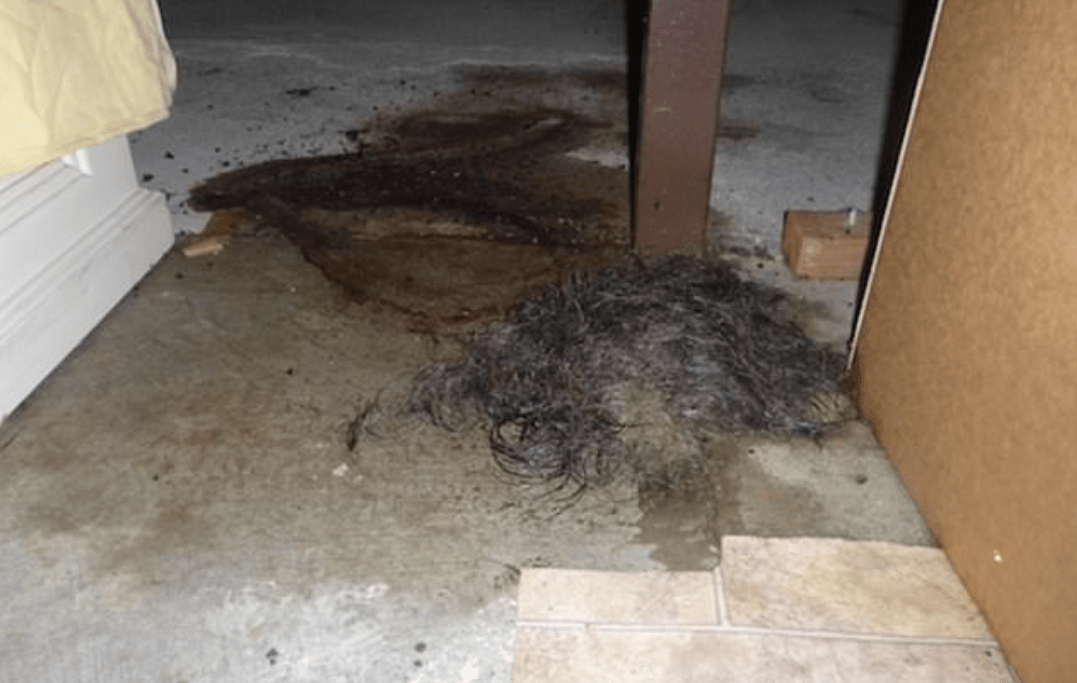
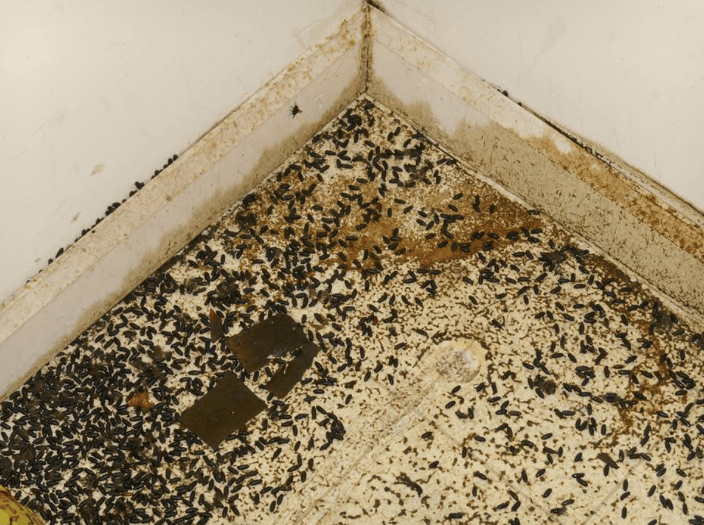
After the flies, the smell and the piles of uncollected mail prompt neighbours to make a phone call and the body is removed, what is left behind is a sombre scene. An apartment left as it was when they died, with some gruesome additions. Cleaners document sheets of skin slipped from the body and stuck to the surfaces it had contact with. Flies, maggots and egg casings showing a whole lifecycle of insect activity, crunching under their feet and flying into windows and glass doors, leaving droplets of human fat behind. Decomposition fluid soaks further than the eye can initially see; a carpet stain that appears to be a square foot wide will have often soaked three times more of the floor underneath. Undiscovered bodies in hot environments can dissolve completely into liquid and bones, mummify, or bloat to extremes.
These unpleasant realities of decomposition are the ones we hope never to have to face. When we smell the death of our neighbours, it means they were not sent off correctly, will encounter difficulties in the afterlife, were not treated well in their first life. For as long as we have been human, we have had rituals and practises surrounding what we need to do with a body. Embalming, mummification, consumption, burial, burning, anything except allowing the body to sit and decay where it fell. In Japan in particular, the corpse requires bathing, accompaniment and special treatment before its cremation, and a kodokushi provides the polar opposite to this. With no transition from life to death via these rituals and rites of passage, and nobody to collect and care for the cremains, the life of the individual is not honoured. Instead, it loses its place in the cycle of life and death and becomes something that has no place, something that is instead a thing to be rid of, a thing to hide and forget. These unclaimed cremains, untended graves, uncared for souls, generate muenbotoke (deceased without ties or attachment) who are believed to wander the earth in misery and resentment.

Although kodokushi rates have risen by almost five times in the past forty years, their prevalence has created community services aimed at preventing these lonely deaths. Social clubs and meetings for the elderly, or non-profit organisations created to check up on apartment residents are becoming more accepted, and the hope is that as this network of care work grows, the number of kodokushi rates will finally start to fall.
If you’d like to watch some interesting but confronting documentaries on kodokushi in Japan you can click here:
Dying Alone: Kodokushi, Japan’s epidemic of isolation through the eyes of a ‘lonely death’ cleaner
Undercover Asia: Lonely Deaths
For my favourite documentary on forgotten bodies, one that affected me for a long time and I still think of often, click here (warning: this documentary contains very graphic footage): A Certain Kind of Death
And for a bonus, here is an artist who makes tiny miniature scenes of kodokushi apartments.
Kim, Jieun. Necrosociality: isolated death and unclaimed cremains in Japan. Journal of the Royal Anthropological Institute, December 2016. Vol. 22 Issue 4. P. 843-863
Nozawa, Shunsuke. Phatic Traces: sociality in contemporary Japan. Anthropological Quaterly, Washington, 2015. Vol. 88 Issue 2. P 373-400.
NHK 2010. Muen shakai: ‘muenshi’ sanman nisennnin no shōgeki [Relationless society: the shock of 32,000 relationless deaths]. Tokyo : Bungei Shunshu.
 Death Imitates Art
Leave a comment